Traditional Office vs Coworking Space
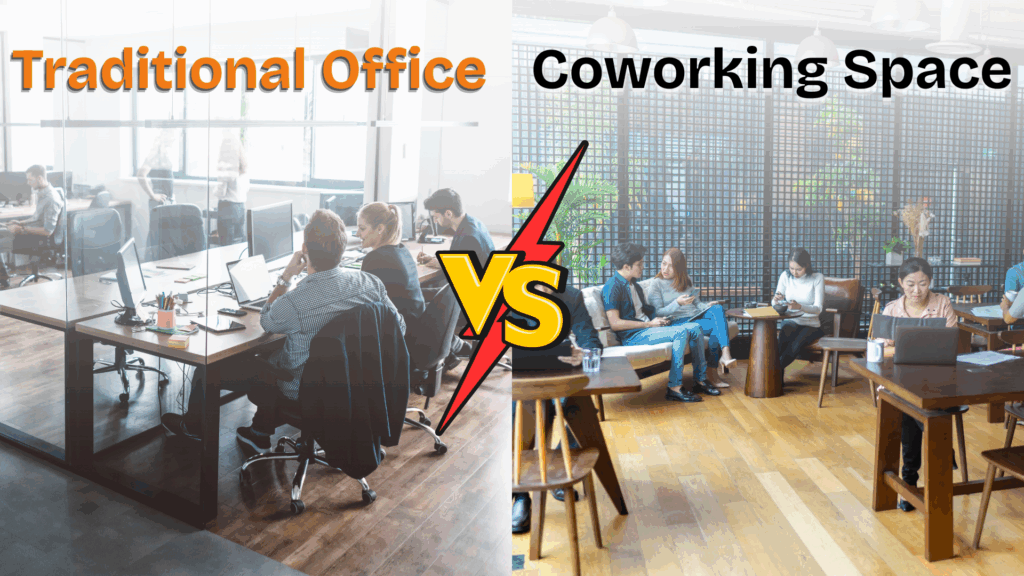
One of the first major decisions every startup founder faces is choosing the right workspace. Should you invest in a traditional office, or is a coworking space the better option?
The workspace you choose can directly impact your startup’s productivity, culture, costs, and growth potential. With the rise of flexible work environments, many startups are shifting from traditional office spaces to coworking setups.
So, what’s best for your startup? Let’s break it down.
What is a Traditional Office
A traditional office is a dedicated space rented or owned by a business for its exclusive use. It typically includes:
✔️ Private workspaces or cubicles
✔️ Meeting rooms and conference areas
✔️ Fixed long-term lease agreements
✔️ Custom branding and office setup
Pros of a Traditional Office
✅ Privacy & Security – Ideal for startups handling sensitive data.
✅ Brand Identity – Customizable space reflects company culture.
✅ Stable Work Environment – No distractions from external businesses.
However, traditional offices come with higher costs and less flexibility—a challenge for early-stage startups.
What is a Coworking Space?
A coworking space is a shared office environment where startups, freelancers, and remote teams work together. These spaces offer:
✔️ Flexible membership plans
✔️ Shared amenities like Wi-Fi, meeting rooms, and lounge areas
✔️ Opportunities for networking and collaboration
✔️ A dynamic and creative work atmosphere
Pros of Coworking Spaces
✅ Cost-Effective – Lower rent and no maintenance costs.
✅ Networking & Collaboration – Meet potential partners, clients, and investors.
✅ Flexibility – Scale up or down as your team grows.
However, coworking spaces may lack privacy, consistency, and dedicated branding opportunities.
Key Differences Between Traditional Office vs Coworking Space
- Cost-Effectiveness
- Traditional Office: Requires a long-term lease, higher rent, and additional expenses like utilities and furniture.
- Coworking Space: Offers flexible payment options, including daily, monthly, or yearly memberships, reducing financial risk.
2. Flexibility & Scalability
- Traditional Office: Less flexible; difficult to scale up or down without financial consequences.
- Coworking Space: Highly adaptable; startups can expand or reduce team size without relocation hassles.
3. Networking & Collaboration
- Traditional Office: Limited to internal employees, which may restrict innovation.
- Coworking Space: Encourages networking with entrepreneurs, potential clients, and investors.
4. Business Credibility & Branding
- Traditional Office: Establishes a professional identity with a permanent address.
- Coworking Space: May not provide the same level of brand authority, but premium coworking spaces offer dedicated offices.
5. Work Environment & Productivity
- Traditional Office: Structured environment fosters focus but can feel isolating.
- Coworking Space: Dynamic setting boosts creativity but may include distractions.
Which Workspace is Best for Your Startup?
When to Choose a Traditional Office
- You require high privacy and security (e.g., fintech, legal firms).
- You have a large team needing a dedicated space.
- You want full control over branding and customization.
- You can commit to a long-term lease without financial strain.
When to Choose a Coworking Space
- You need a cost-effective solution with minimal overhead.
- You thrive on networking and community-building.
- You have a small team or remote workers.
- You need flexibility to scale up or down as needed.
Future of Workspaces for Startups
The future of startup workspaces is leaning toward hybrid models—a mix of traditional offices and coworking solutions. Startups are increasingly adopting:
✔️ Remote-first policies with flexible office access.
✔️ On-demand coworking memberships for hybrid teams.
✔️ Tech-integrated offices with smart meeting rooms and cloud-based collaboration.
Understanding these trends can help startups stay agile and adapt to changing work environments.
Conclusion
Choosing between a traditional office and a coworking space is a crucial decision for startups.
- If you need privacy, brand identity, and long-term stability, a traditional office is the way to go.
- If you prefer flexibility, cost savings, and networking opportunities, a coworking space is ideal.
Ultimately, the best workspace is the one that aligns with your startup’s needs and growth strategy.
FAQs
Is coworking space better for a startup than a traditional office?
Coworking spaces offer cost savings and flexibility, while traditional offices provide stability and branding opportunities. The best choice depends on your startup’s needs.
How much does a coworking space cost compared to a traditional office?
Coworking spaces typically cost 50-70% less than traditional office leases since they include shared utilities and flexible membership plans.
Can startups switch from coworking to a traditional office later?
Yes! Many startups begin in coworking spaces and transition to traditional offices once they scale and stabilize.
Are coworking spaces suitable for all industries?
Coworking spaces work best for tech startups, creative agencies, and freelancers. Industries requiring strict privacy (e.g., finance, law) may prefer traditional offices.
What are the biggest challenges of coworking spaces?
Coworking spaces lack privacy, may have distractions, and don’t always provide the same level of brand authority as a dedicated office.
Can coworking spaces help startups grow faster?
Yes! Networking, collaboration, and shared resources in coworking spaces often accelerate startup growth.
Do coworking spaces offer private offices?
Yes, many coworking spaces now offer dedicated offices and meeting rooms for startups needing privacy.
Is it harder to attract investors without a traditional office?
Not necessarily. Many investors now accept remote-friendly and coworking-based startups as long as they show strong business potential.
Can a startup use both coworking spaces and traditional offices?
Yes, hybrid models are becoming popular, with startups using coworking spaces for networking and private offices for core operations.
How do I decide which workspace is right for my startup?
Consider your budget, team size, privacy needs, growth plans, and work culture before making a decision.