The Green Shift in Startup Ecosystem
In 2025, building a startup is no longer just about profits—it’s about purpose. Customers, investors, and even governments are asking the same question: How sustainable is your business model?
That’s where green business models come in. These are startup business models designed not only to generate revenue but also to reduce waste, cut carbon emissions, and create long-term positive impact. And here’s the exciting part: sustainable startups aren’t just good for the planet—they’re scaling faster and attracting more investor interest than ever before.
At Innomax Startup Advisory, we’ve seen how founders who embrace sustainability early unlock new markets, win customer loyalty, and gain access to a growing pool of impact-focused funding. Whether it’s a D2C eco-friendly brand, a SaaS platform tracking carbon footprints, or renewable energy ventures, these startups prove that “green” and “profitable” go hand in hand.
This article breaks down the rise of green business models in 2025, why they matter, examples of business model startups already thriving, and how you can build a sustainable startup that scales—without compromising profitability.
What Are Green Business Models?
A green business model is simply a startup business model that combines profit with sustainability. Instead of only focusing on revenue, it also considers environmental and social impact.
Here’s what it means in practice:
- ✅ Profit + Purpose – The startup makes money and contributes to sustainability.
- ✅ Efficient Use of Resources – Less waste, smarter supply chains, renewable energy adoption.
- ✅ Customer Trust – Eco-conscious buyers prefer startups with sustainable business models.
- ✅ Investor Appeal – In 2025, VCs and angels are actively funding sustainable startups.
- ✅ Future-Proof Growth – Regulations and market demand are shifting in favor of green ventures.
📌 Examples:
- A D2C brand using recyclable packaging as part of its business model.
- A carbon-tracking SaaS startup helping companies meet ESG targets.
- A renewable energy startup making clean power accessible and profitable.
In short: a green business model proves that sustainability is not just “good PR”—it’s a winning strategy for long-term growth.
Why Sustainable Startups Are Scaling in 2025
In 2025, sustainable startups are not just surviving—they’re scaling faster than many traditional businesses. Here’s why:
- Rising Customer Demand – Today’s buyers prefer eco-friendly brands and are willing to pay more for sustainable products.
- Investor Shift Toward ESG – VCs, angel investors, and impact funds are prioritizing green business models because they’re future-proof and attractive to LPs.
- Global Regulations – Governments worldwide are introducing stricter sustainability rules, pushing companies toward greener solutions.
- Innovation Advantage – Many business model startups built on sustainability are driving innovation in packaging, logistics, energy, and SaaS.
- Long-Term Stability – Green startups reduce dependency on scarce resources, making them more resilient to economic shocks.
In other words, sustainable types of business models aren’t just ethical—they’re smart, scalable, and aligned with where the global economy is heading.
Top Green Business Models in 2025
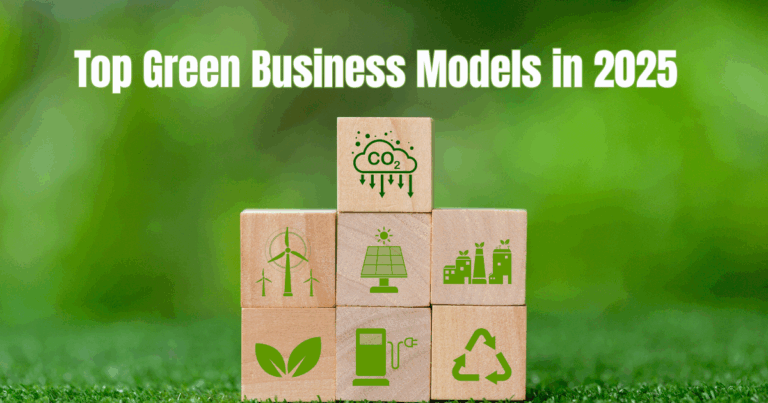
Not all startups approach sustainability the same way. Here are the top green business models founders are building in 2025—models that are profitable, scalable, and attractive to investors.
- Circular Economy Startups
- Focus: Reuse, recycle, repair, and repurpose.
- Example: A fashion startup turning textile waste into new clothing.
- Why it works: Reduces waste while creating a new revenue stream.
- Focus: Reuse, recycle, repair, and repurpose.
2. Green Tech SaaS
- Focus: Software tools that help businesses track emissions, manage ESG compliance, or optimize energy use.
- Example: A SaaS startup offering carbon footprint tracking for enterprises.
- Why it works: Subscription-based recurring revenue + regulatory-driven demand.
3. Renewable Energy Ventures
- Focus: Solar, wind, EV infrastructure, and storage solutions.
- Example: A clean energy startup building affordable solar grids in urban areas.
- Why it works: Rising energy costs + global shift to renewables.
- Focus: Solar, wind, EV infrastructure, and storage solutions.
4. Sustainable Consumer Goods
- Focus: Eco-packaging, zero-waste personal care, and organic fashion.
- Example: A startup business model built around plastic-free packaging.
- Why it works: Eco-conscious consumers + strong brand loyalty.
- Focus: Eco-packaging, zero-waste personal care, and organic fashion.
5. Green Finance & Carbon Credits
- Focus: Platforms for carbon credit trading, green lending, or impact investing.
- Example: A fintech startup enabling SMEs to offset carbon emissions.
- Why it works: New revenue models + investor focus on ESG portfolios.
These types of business models prove that going green doesn’t mean sacrificing profits—in fact, it opens the door to entirely new industries.
Case Studies: Green Startup Examples
1. Patagonia – Circular Economy in Fashion
- Business Model: Repair, reuse, and resale of outdoor gear.
- Why It Works: Customers love the mission-driven approach, and it builds long-term loyalty.
- Lesson for Startups: Embedding sustainability into your business model startup example creates both impact and revenue.
2. Too Good To Go – Fighting Food Waste
- Business Model: A mobile app that connects restaurants with customers to sell surplus food at lower prices.
- Why It Works: Reduces food waste while providing affordable meals.
- Lesson: Turning a waste problem into a scalable opportunity is a winning startup business model.
3. Climeworks – Carbon Capture as a Service
- Business Model: Direct air capture technology that removes CO₂ and sells carbon credits.
- Why It Works: Aligns with regulatory push and investor demand for carbon-neutral solutions.
- Lesson: Even hard-tech business model startups can attract funding when aligned with sustainability.
4. Allbirds – Sustainable Consumer Goods
- Business Model: Eco-friendly footwear made with natural materials like wool and sugarcane.
- Why It Works: Strong branding + premium eco-conscious positioning.
- Lesson: Customers reward startups that prioritize sustainability in types of business models.
These examples prove that green startups can scale across industries—fashion, food, energy, SaaS—and still stay profitable.
How to Build a Green Business Model for Your Startup (Step-by-Step)
Creating a sustainable startup business model doesn’t have to be complicated. Here’s a simple step-by-step process you can follow:
1. Identify Your Core Purpose
- Ask: What problem am I solving, and how does it connect to sustainability?
- Example: A delivery startup focusing on electric vehicles to cut emissions.
2. Choose the Right Type of Business Model
- Options: Circular economy, subscription-based SaaS, carbon credits, eco-friendly products.
- Match it with your industry and target audience.
3. Design for Efficiency
- Cut waste, optimize resources, and consider eco-friendly supply chains.
- Example: A consumer goods startup switching to biodegradable packaging.
4. Embed Sustainability into Value Proposition
- Don’t just “add green” later—make it part of your brand DNA.
- Customers trust startups where sustainability feels authentic.
5. Test with a Lean MVP
- Build a small version of your sustainable solution.
- Example: Launch a pilot program to measure customer demand.
6. Measure Impact (Not Just Profit)
- Track metrics like carbon saved, waste reduced, or renewable usage.
- Many investors now prioritize startups that can show measurable ESG impact.
7. Pitch to the Right Investors
- Highlight both growth potential and sustainability metrics.
- Remember: In 2025, many funds focus exclusively on green business models.
By following this roadmap, you’ll create a business model startup that is not only profitable but also future-proof and aligned with global trends.
Challenges Green Startups Face (and How to Overcome Them)
Even though sustainable startups are scaling fast, founders often hit roadblocks. Here are the most common challenges—and ways to overcome them:
1. High Initial Costs
- Challenge: Eco-friendly materials, renewable tech, or R&D can be expensive.
- Solution: Start small with a lean MVP, explore startup funding options, and highlight sustainability to attract impact investors.
2. Scaling Operations
- Challenge: Many types of business models in green startups require logistics or supply chain shifts.
- Solution: Partner with existing eco-suppliers instead of building everything from scratch.
3. Educating Customers
- Challenge: Some buyers still see “sustainable” as costly or unnecessary.
- Solution: Use storytelling and business model startup examples to show how green is both affordable and impactful.
4. Regulatory Complexity
- Challenge: Different markets have different sustainability standards.
- Solution: Work with advisors to navigate compliance and build globally adaptable models.
5. Balancing Profit and Purpose
- Challenge: Founders sometimes over-prioritize impact and under-optimize revenue.
- Solution: Blend sustainability with proven startup business models like subscriptions, SaaS, or marketplaces for stability.
Bottom line: Every challenge has a solution when sustainability is part of your core business strategy—not just an afterthought.
Conclusion: Building a Startup That’s Both Green & Profitable
The future belongs to founders who align profit with purpose. In 2025, green business models are no longer “nice-to-have”—they’re the foundation of the fastest-scaling and most investable startups.
Whether you’re exploring the types of business models in sustainability, studying a business model startup example, or designing your own startup business model, the key is simple:
Solve real problems, stay authentic, and build impact into your DNA from day one.
At Innomax Startup Advisory, we help founders structure, validate, and scale business models that attract both customers and investors—without compromising on sustainability.
Your startup can be the next success story. The question is: Are you ready to build green and grow big?
Frequently Asked Questions (FAQs)
1. What is a green business model for startups?
A green business model is a startup business model built around sustainability, focusing on reducing environmental impact while generating profit.
2. Why are green startups profitable in 2025?
Eco-conscious consumers, stricter regulations, and investor demand make sustainable business models highly profitable and scalable today.
3. What types of business models work best for green startups?
Top models include circular economy, green SaaS, renewable energy, eco-friendly consumer goods, and carbon credit platforms
4. Can small startups adopt sustainable business models?
Yes, even small startups can adopt eco-friendly practices by starting lean—like using sustainable packaging or ethical sourcing.
5. Do investors fund green startups?
Absolutely. Many investors in 2025 focus specifically on green business models and ESG-aligned ventures.
6. What are some business model startup examples in sustainability?
Examples include Too Good To Go (food waste), Allbirds (eco-footwear), and Climeworks (carbon capture).
7. Is bootstrapping possible for green startups?
Yes, but founders often combine bootstrapping with grants, crowdfunding, or impact-focused startup funding options.
8. What challenges do green startups face?
High costs, scaling supply chains, customer education, and navigating regulations are common challenges.
9. How do I choose the right sustainable model for my startup?
Match your startup business model with customer demand, industry trends, and long-term scalability.
10. Why do some sta10. Are green startups only about the environment?rtups fail despite a great product?
No, they also create strong financial returns by blending sustainability with proven types of business models like SaaS, subscriptions, and marketplaces.